2008 - National Policy on ICT in School Education - first draft
In January 2008, the Ministry of Human Resource Development (MHRD) released a draft National policy on ICTs in school education. This policy, drafted by a committee that included big businesses interested in the 'ICT in education' space was hugely problematic. The draft seemed to look at education system as a purchaser of proprietary content, software and training services, instead of seeing ICT as a resource to strengthen the public system, empower teachers and build a resource-rich curricular environment. The draft stated the aim of the policy was to create a "labour force for the global economy"; the larger socio-political aims of education were completely ignored.
ITfC advocated against the role given to technology vendors, with vested interests, in the policy-making processes. IT for Change networked with educationists across the country (through the ict-education-india googlegroups, created for this purpose) and alerted about the dangers of this draft policy, organised two national consultations, to build broad positions. The network of educationists submitted several policy advocacy letters as well as substantive comments on the policy. Some also met officials in MHRD and other institutions to explain how ICTs in education required a deep understanding of education, rather than of just technology, the flaws in the draft policy and the possibilities of integrating ICT to serve accepted educational aims.
Consultation with educationists
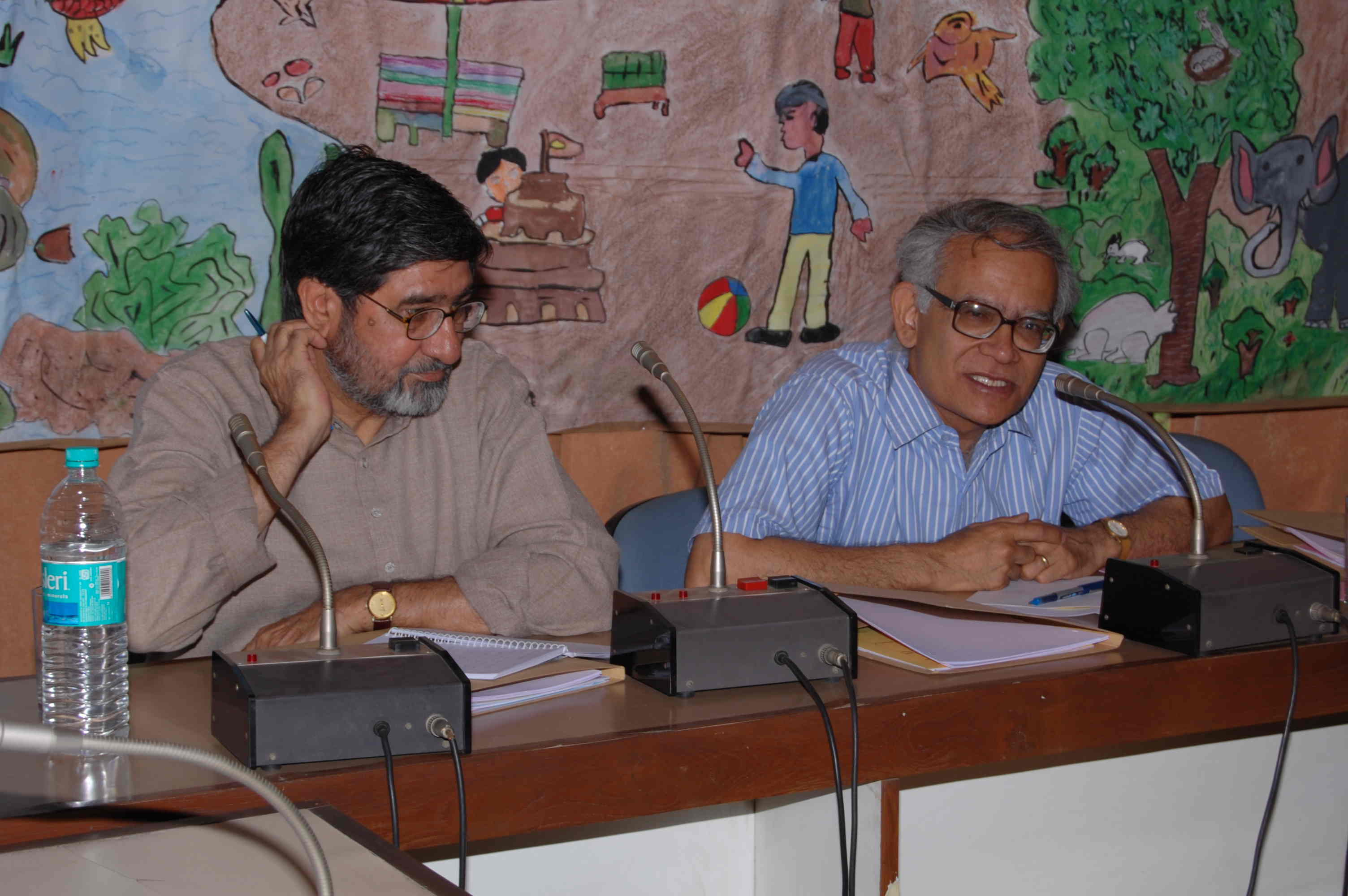
Beyond commenting on the policy draft, IT for Change wrote letters to the MHRD in March and October 2008. IT for Change also co-organised a consultation on 'National policy on ICTs in school education' (29-30 April 2008) at NCERT, which aimed to generate a set of policy directives based on educational perspectives and policies, as an input into the NPISE being formulated by the MHRD. The report of the consultation is available here. A series of "Short Discussion Papers" were produced for the consultation:
-
IT for Change, ICT in the context of education system
-
Hriday Kant Dewan (Vidya Bhawan Society, Udaipur), ICT in the context of education system
-
Dileep K. Ranjekar and Sunitha Amencherla (Azim Premji Foundation, Bengaluru), ICT policy recommendations from computer-aided learning
-
Manas Chakrabarti (Learning by Design, New Delhi), ICTs in secondary education
-
Nagarjuna G. (Free Software Foundation of India, Mumbai), What policy should India adopt for ICT in school education?
-
Zakiya Kurrien (Centre for Learning Resources, Pune), The use of educational radio for improving the quality of teaching and learning in government regional medium elementary schools
-
Sajan Venniyoor (Community Radio Forum of India/Prasar Bharati), The promise of educational radio
-
Professor Yash Pal, Technology and education
-
Hriday Kant Dewan (Vidya Bhawan Society, Udaipur), Teacher education
-
Rajaram S. Sharma (NCERT), ICT and teacher education
-
Deepika Singh, (Udaan - Education Resource Centre, Ahmedabad) and Stalin K. (Drishti and Video Volunteers, Ahmedabad), Videoshala: An innovation in ICT for elementary education
-
Anjali Noronha (Research and Material Development, Bhopal), Teacher education and ICTs
-
Poonam Batra (Central Institute for Education, University of Delhi), Current challenges for teacher education and ICTs
In November 2008, due to these representations, the MHRD minister cancelled the privatised policy making process.
The policy itself had three more drafts over the next 3 years - the second policy draft included many of our suggestions - education perspectives, focus on teacher education, support constructivist approaches to integrating ICTs in education, systemic integration rather than just hardware and software procurement, resource rich environment, FOSS etc, and was quite different from the first one. The second stresses the importance of teachers' professional development, local content creation, universal access, including ICT capacity building for teachers within teacher pre-service and in-service training programmes, ICT literacy as a precursor to ICT enabled learning. A large part of the feedback comments submitted by ITfC along with many other organisations were considered.
The third policy rolled back several progressive clauses of the second policy. In April 2011, on behalf of eminent educationists across the country, IT for Change submitted a letter on the third policy draft to the Secretary, Department of School Education and Literacy, MHRD. ITfC also submitted detailed in-line comments on the third draft policy.
The fourth and final version of the National Policy on ICTS in School Education, which further refined the second draft, was issued by NCERT in June 2012.
The issue of 'vendor driven ICT policy/program' was also raised by Vinod Raina in the Central Advisory Board of Education (CABE) He was part of a CABE sub committee which looked into this and their report provides several ideas on the role ICTs should play in education. Both the final ICT policy in school education and the CABE committee report were unanimously adopted at the CABE meeting in June 2012.
ITfC's advocacy on this issue resulted in the abandonment of a policy flawed in process (involvement of technology vendors with a vested interest) and substance (situating an education policy in technological perspectives than educational perspectives, contexts and priorities), and in its replacement by a progressive National policy on ICT in School Education, that can serve as an exemplar to states in India and other countries.
Documents